

How to Be a Conscious Traveler: Ways to Travel Or Live Abroad Without Harming the Places You Love
✈️ Grab Your Free Travel Resources Inside → Get the Printables
If you’re craving more than just a bucket list and a picture-perfect itinerary, or you want to move through the world with intention and care, this guide is for you.
I’m sharing what conscious travel really looks like for those of us who still love our creature comforts. These gentle shifts, from where you stay to how you engage, are small but meaningful. They matter. And they just might change the way you travel forever.
Get your free download at the end of this post!

Want a printable version of these tips for your next trip?
Scroll to the bottom for your free Conscious Travel Mini Guide.
When I moved to Spain, I was acutely aware of the housing crisis they are experiencing. Now, I know you could sit there and say, “Tiffany, everywhere has a housing crisis right now!“, and you would not be wrong. However, I do believe that when you travel or move abroad, you have a responsibility to do so with respect for the local population. Whether this is in your home country or abroad, minimizing your impact on the people around you is always an important consideration.
As Americans, while we do definitely struggle, it can be easy to go to another country where the dollar goes much further and spend like crazy or live a lavish life. But as I become more settled in my new community here in Spain, I’m becoming more and more aware of my impact as an immigrant.
Expat relocations are definitely on the rise, as is immigration. Social media is rife with posts about leaving America for a better life abroad. Immigration statistics seem to show that people aren’t just talking about it anymore. They are doing it, just like I did.
So my intent with this post is to empower other expats and immigrants to live gently and consciously abroad.
“This post isn’t about guilt—it’s about guidance. If you love a place, you take care of it. Simple as that.”

How Travel Choices Impact Local Communities
To understand the impact you could have, you should first have a full understanding of the vocabulary used to talk about this topic. So let’s cover those to start:
Gentrification: What Travelers Need to Know
Definition: The process by which wealthier individuals move into and renovate a neighborhood, often resulting in rising property values and rent that displace lower-income residents who originally lived there.
Context: While it may bring new businesses and infrastructure, gentrification often makes housing unaffordable for locals, especially in areas that attract foreign investors or digital nomads.
Expat vs. Immigrant: Why the Words Matter
What Does It Mean to Be an Expat?
Definition: A person living temporarily or permanently in a country other than their native one, often used to describe people from wealthier countries who relocate for work, lifestyle, or adventure.
Context: The term “expat” is frequently used for Westerners living abroad, especially in Europe or Southeast Asia, and tends to carry a tone of privilege or romanticism.
What Defines an Immigrant in Travel Contexts
Definition: A person who moves to a foreign country with the intention of settling there permanently, often seeking better economic conditions, safety, or opportunities.
Context: The word “immigrant” is more often applied to those moving from less wealthy nations, and it carries vastly different social and political connotations—even when describing the exact same act of relocation. Same action. Different label. Language reveals privilege.
Recognizing Economic Privilege While Abroad
Definition: The advantage someone has in life due to their access to financial resources, stability, or opportunities, often inherited or linked to their country of origin.
Context: As a foreigner from a wealthier country (like the U.S. or UK), you may earn in strong currencies, allowing you to live more affordably in places where locals earn much less, giving you outsized influence on the housing market, consumer prices, and job competition, even if unintentionally.
What Conscious Travel Really Means
As an expat or immigrant, you may have the best of intentions when relocating. But the truth is, your intentions help no one. Actions do. What you do matters. Please remember, we are guests here. Even as immigrants.
“Travel isn’t just about going places. It’s about how you show up when you get there.”

Making Ethical Housing Choices While Traveling
When you travel or move abroad, where you stay has, quite possibly, the biggest impact on the local population.
You may remember the 2024 travel season where locals in Barcelona sprayed water all over tourists while chanting that they should “go home.”
Mind you, Spain depends on tourism in many areas, even Barcelona. So their issue wasn’t really with the tourists, it was with the impact the tourists were having. Why?
In that instance, it was a two-fold problem. The government had approved too many Airbnb rental licenses to owners, and too many tourists were using them in abundance.
Like it or not, Airbnb has had a very detrimental affect on local populations the world over. If a place is rented to tourists through Airbnb, it might be nice money for the owner, but it also displaces locals who could potentially rent those places long term. Spain definitely has a housing crisis in larger expat areas. I’ve experienced this first hand. And while some of the laws that Spain maintains definitely encourage some of this behavior, as tourists we have a lot of control over our impact by opting to stay in local hotels, guest houses, and inns run by locals instead of larger rental companies or corporations.
Long-Term vs. Short-Term Rentals: Which Is Better for Communities?
There are a lot of issues around long-term rentals in Spain. While some landlords only rent long-term, but the majority rent short-term. Some of this is due to Spanish law (or the lay person’s interpretation of those laws), and some is due to growing expat and immigrant populations.
Now, I’ll be the first to say that this problem is not solely the result or fault of foreigners. As with any country, there are a lot of factors at play. My point is rather that, as foreigners, we can reduce our impact, which helps to maintain these places we love so much for future visits and future generations simultaneously.
How to Rent Ethically Without Disrupting Local Housing Access
Supply and demand are king, no matter where you go in the world. Creating more of a demand for long-term housing encourages exactly that.
- Avoid Airbnbs, especially in cities or neighborhoods with housing shortages or lower income populations.
- Book a short-term spot only for arrival, then secure long-term housing like a local would. It’s not easy, but it’s not impossible. This stabilizes neightborhoods and supports fair rental practices.
- Look for rentals on local platforms, not just expat-targeted platforms. Use websites like Idealista, Fotocasa, or Milanuncios in Spain, rather than English-language or luxury-focused platforms (unless you intent to stay in a luxury area and pay luxury prices) Listings made for locals typically offer fairer pricing.
Choose Neighborhoods That Support Locals, Not Just Tourists
Pick neighborhoods that aren’t being gentrified out of existence. If you can afford it, don’t immediately move into trendy, historic districts. Consider emerging areas or nearby towns where your presence doesn’t displace families or raise prices for local workers. Places that have more housing to begin with.
Respecting Local Living Conditions Without Trying to “Fix” Them
Moving into an apartment only to start making demands of the landlord for updates and renovations can create a situation where the next tenant after you will pay more than you did. If you apartment is safe and functional, try to adapt to the new way of living. After all, you did move to a different country. You have to accept all that entails to minimize your impact.
Research Who Owns the Property Before You Book
Renting from a local owner instead of a multinational or investor group will go a long way to keeping money circulating in the local community. These types of choices matter, so choose wisely.
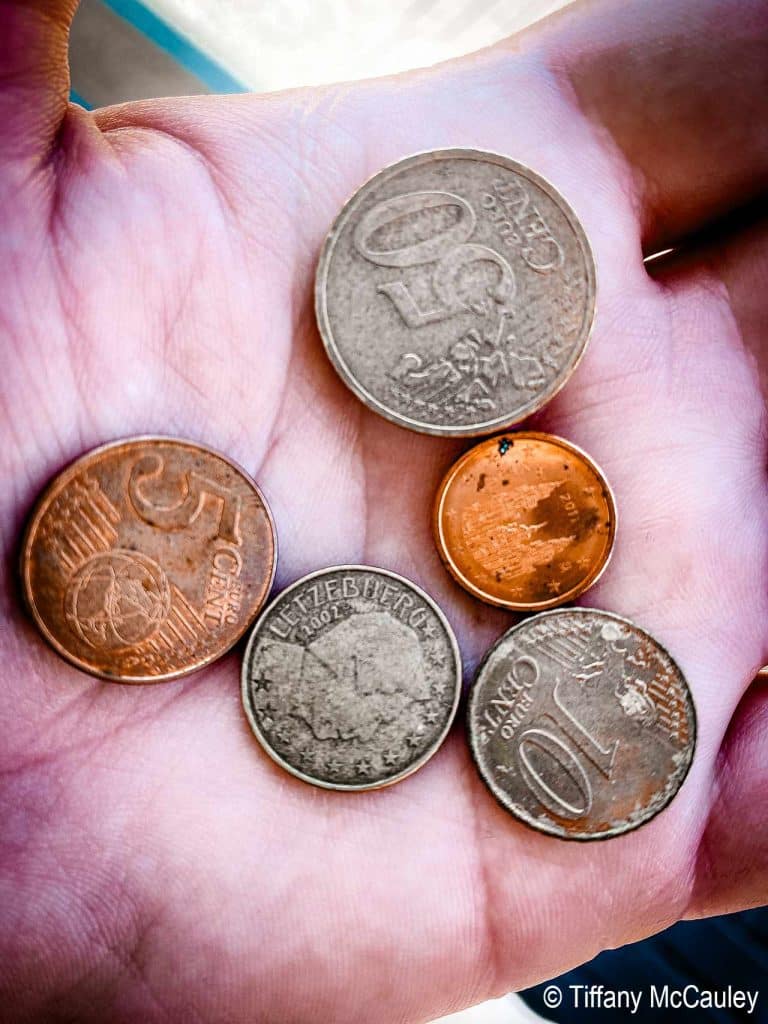
Are You Overpaying Rent Abroad in a Way That Hurts Locals?
When you pay rent in a country that is cheaper than what you are used to, it’s easy to fork over your monthly rent with a smile on your face. But here’s where this gets sticky. What feels “fair” to you, may not be fair to the local community at large. What you pay may actually contribute to unaffordable housing for the local population. So what can you do?
Compare Rent to Local Wages, Not Your Home Income
In Spain, the average monthly salary is €1,800 (under $2000 USD). If your rent is €1,500 a month, that’s not just expensive, it’s unsustainable for the local population. Aim to pay no more than 30-40% of what a local professional would earn instead of your own, foreign salary. Yes, it may take you a little longer to find a place. But it’s the only way to keep costs down, not only for locals, but for your long-term finances as well. Your choices affect everyone, even you!
Higher Rent Doesn’t Always Mean Higher Quality
Especially outside of the States, many landlords will raise prices just because foreigners will pay those prices. But that doesn’t mean the place is worth it. If it seems wildly overprices, it probably is, and paying it creates a harmful circle that will eventually affect you too.
Avoid “Expat Pricing” That Drives Up Local Costs
Firstly, it’s worth mentioning that expats are often easy pray for rental scams. (More on that in a future post). Avoid listings with vague descriptions, no local references, or all-English communication. Not only can they be scams, but they are mostly likely also over priced specifically for foreigners. As a local friend or join a Facebook group to gut-check the price.
Scam tip: If the person you communicate with tells you a friend or family member will meet you at the property, 9 times out of 10 it’s a scam. Also, watch out for places that require more than a month-worth of deposit.
Ask Yourself This Before You Book
“Would a local nurse, teacher, or shop worker be able to live here?” If the answer is no, you’re likely paying too much for that area and displacing locals in the process.
How to Negotiate Rent Ethically as a Traveler
Yes, you can negotiate rent in other countries. But do it with honesty and integrity, not exploitation. Particularly if you are renting from locals who depend on rental income for their livelihood.
If you are dealing with agencies who are pricing things sky high just for you, negotiate until the cows come home or avoid those places completely!

How to Support the Local Economy Without Causing Harm
Shopping local matters. Thankfully, in most countries outside of the US, this is remarkably easy. Shop at open markets, small shops, and other family-run spots to keep the money in the same local spot. The ideas is, the dollar you take out of the bank shouldn’t be spent outside the town the bank is in (if that’s where you live).
Avoid global chains and online mega-retailers. This has been my biggest downfall in adjusting to my new life here because Amazon so easily delivers the things I cannot find locally. But slowly, I am phasing these purchases out as I find local replacements. It’s find to shop this way when you first arrive, but be conscious about making the switch to local purchases over time. It makes a huge difference.
Respect Local Culture Without Falling Into Appropriation
This one hits close to home, because I came here not speaking a word of Spanish. But the truth is, if you move abroad, learning the language is not just functional, it’s critical to help maintain the local culture. Learning the language where you choose to live, even if you learn it slowly, will help avoid the necessity for locals to speak your language. (In most cases, English).
Celebrate the local cultures and language. Don’t colonize. Nobody owes you your own culture in a foreign country. Uplift local customs every chance you get.
Insider perspective: The pride you feel when you can say even simple sentences in the local language is worth all the effort it takes to learn it. I promise!
Easy Low-Waste Habits for Conscious Travelers
If you move to a new country, travel the way the locals travel. Public transportation is typically wonderful abroad in most places. Grant it, not every place is easily accessible with a bus or train, but more populated areas where expats like to settle are typically very well connected. Use public transport every chance you get. If you drive, buy your car locally and fill up your gas tank locally.
Watch your energy and water consumption in other countries. If the country you are in has droughts, be mindful of how much water you use. While you may very well be able to easily afford the water bill, that doesn’t mean you can consume as much water as you want. Resources can be limited in some places. Be respectful of that.
Recycle whenever possible. Much of Europe is really good at recycling. So don’t just throw stuff in the trash. Take the time to be respectful of the environment and do as much as you can. Use reusable shopping bags, ride a bike, shop second-hand stores, etc.
How to Work Remotely Abroad Without Exploiting Local Spaces
Mindfulness in how we portray places and people that aren’t our own is critical as a foreigner.
Social media is overrun with creators who post about local prices. Even I’m guilty of having done that in a local grocery store in the beginning. But once I knew better, I took down that video and will not be posting anything like that again. I still have one post here that is about how much is cost me to move to Spain. But much of that is American pricing. While I did post a few Spanish prices as well, it was within the context of education. It was not needless broadcasting of prices that are lower here than in the US.
Here are some tips to remember as a content creator or remote worker:
- Ask for permission before posting. Shop interiors, private homes, and especially people. In fact, many countries in Europe make it illegal to post other people without their express consent. So do the right thing and avoid breaking the law all at once. It’s a win-win.
- Don’t romanticize hardship. You might like a particular look in a particularly “gritty” part of a city, but romanticizing it does all harm and no good. There are real people behind that grittiness. Don’t publicize it unless you can do so with dignity and permission.
- Be transparent. If a location sponsored you or gifted you something, disclose it.
- Respect scared and quiet spaces. Don’t film in churches, cemeteries, or private cultural rituals unless you 100% know that it is acceptable to do so.
What You Shouldn’t Film or Post While Traveling
Set healthy boundaries for content that protects people’s dignity and your own integrity.
- Avoid filming or photographing children, the elderly, or unhoused people, especially without their awareness or proper context.
- Avoid filming or photographing “hidden gems” in fragile places. Sometimes, secrecy protects a place more than exposure. Use common sense and be respectful.
- Avoid filming or photographing locals in moments of vulnerability. Hospital visits, public arguments, poverty, protests, and natural disasters are all things that should never make your camera roll unless you are an ethical and qualified journalist. Sorry bloggers, that doesn’t apply to the majority of us.
- Avoid filming or photographing government buildings, police, or immigration offices.
Avoid Digitally Extracting Cultures and People
Creators should never “take” stories, images, or culture without giving back or without express permission.
Don’t just talk “about” locals, share stories “with” locals. Interview local business owners, ask permission to feature artisans, tag local creators, etc.
Acknowledge that being able to travel and share is a form of power and privilege that should be used mindfully and respectfully.
How to Use Your Platform to Give Back
So what are some ways creators can contribute, not just consume?
- Donate a % of income from guides, affiliate links, or brand deals to a local nonprofit, cultural center, or housing aid organizations.
- Feature local businesses regularly.
- Amplify local creators or small influencers in the country you live or stay in.
- Hire locals for photography, tours, translation, etc., and give credit.
- Offer useful info to other newcomers in ways that discourage entitlement and promote cultural humility.

The Lazy Girl Travel Mindset: How to Be a Gracious Guest
Being mindful of the locality you are in is not about doing everything perfectly. It’s about showing up with care. You can love your life in a new country and still do better for the people around you. You don’t have to be a drain on their culture and community.
To sum everything up, here are 5 things you can do to be a positive influence on the area you land in:
- Shop and Eat Local – Skip the global chains and spend your money at family-run cafés, mercados, markets, and co-ops. This supports the local economy, preserves culture, and builds community ties.
- Rent Like a Local, Not a Tourist – Use platforms locals use (Idealista, Fotocasa, etc.), avoid Airbnb in housing-strained areas, and choose neighborhoods not being aggressively gentrified. This reduces housing pressure and keeps locals from being priced out.
- Share the Spotlight – In your content, tag local creators, feature local businesses, and amplify real voices from your new community. This builds equity in the digital space and redirects visibility and traffic to those who live there.
- Learn Basic Language + Cultural Norms – Even 5–10 phrases go a long way in showing respect. So does understanding siesta hours, tipping etiquette, or what’s considered rude. This will deepen trust and prevents the “rude foreigner” stereotype from growing.
- Give a Little Back (Regularly) – Donate 5% of your online sales, volunteer an hour a month, or promote a community fundraiser once a quarter. This keeps your presence regenerative, not extractive.
Final Thoughts on Traveling More Consciously
I’m not here to shame. The truth is, I made many of the above mistakes when I first got here. But with time, I’m making it a point to do better. That’s all anyone can do. Just keep in mind that anything you can do to contribute and uplift the area you live in always comes full circle. Always be a conscious traveler.
Grab Your Free Conscious Travel Mini Guide
⭐ 45+ ways to be a Conscious Traveler here. ⭐


